
TIRES
When selecting tires and inner tubes for a bicycle, it is important to get compatible components. There are many different tire and wheel sizes available. Unfortunately, the bicycle industry has not always had consistently clear nomenclature for tire standards.
Tires are made with a steel wire or fabric cord molded into each edge of the tire called the “bead”. The tire bead effectively forms a circle and the diameter of this circle determines the tire fit to the rim. The tire bead is sized to fit into the rim bead seat, which is the area below the outer rim edge.
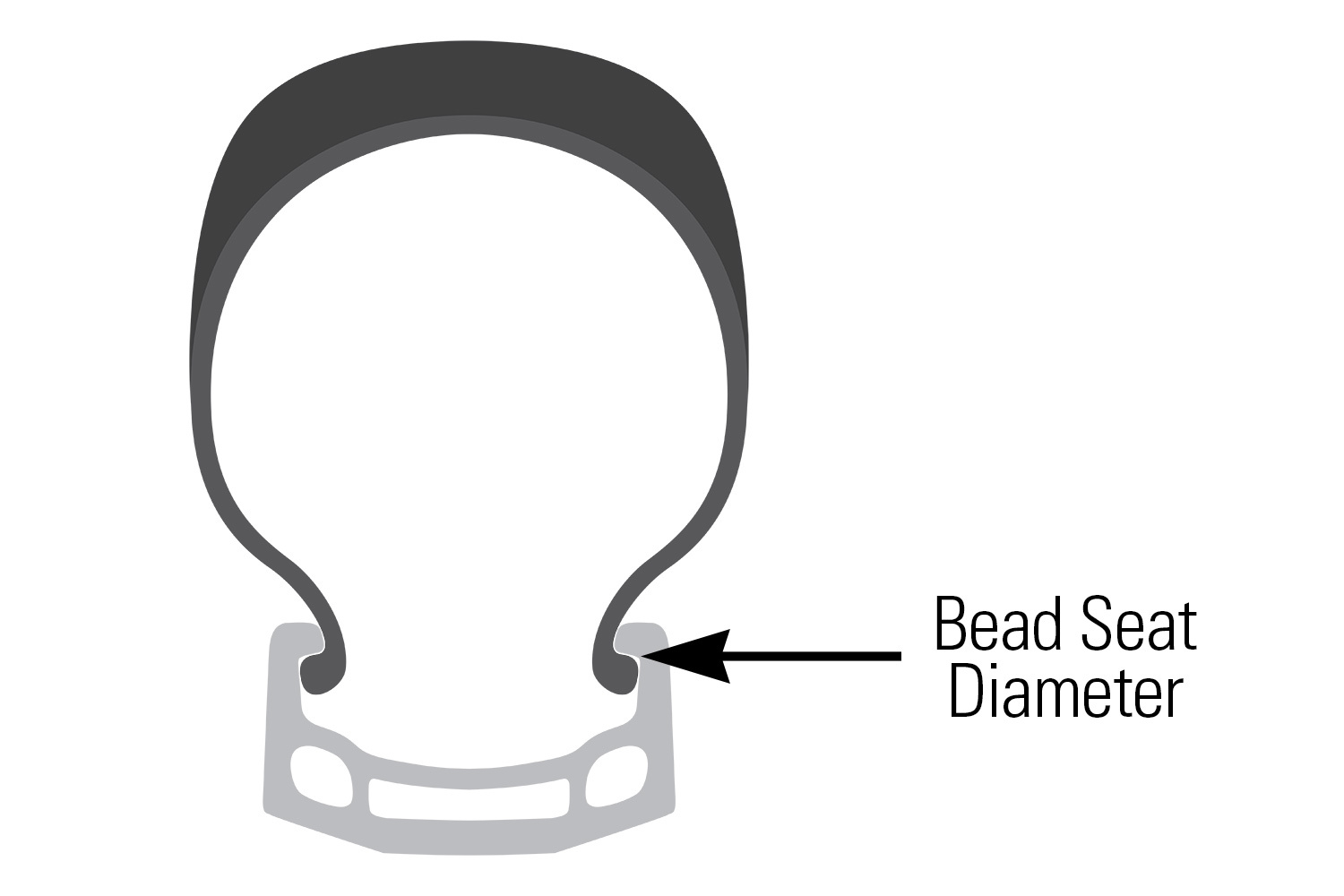
Do not attempt to mix tires and wheels with different bead seat diameters. Although the bead seat diameter determines the tire and wheel fit, there is little consistency between manufacturers in how tires are labeled or identified. Different countries at times have used different nomenclature in marketing and labeling their tires. This causes confusion when selecting a tire for a wheel and frustration when installing a tire.
INCHES
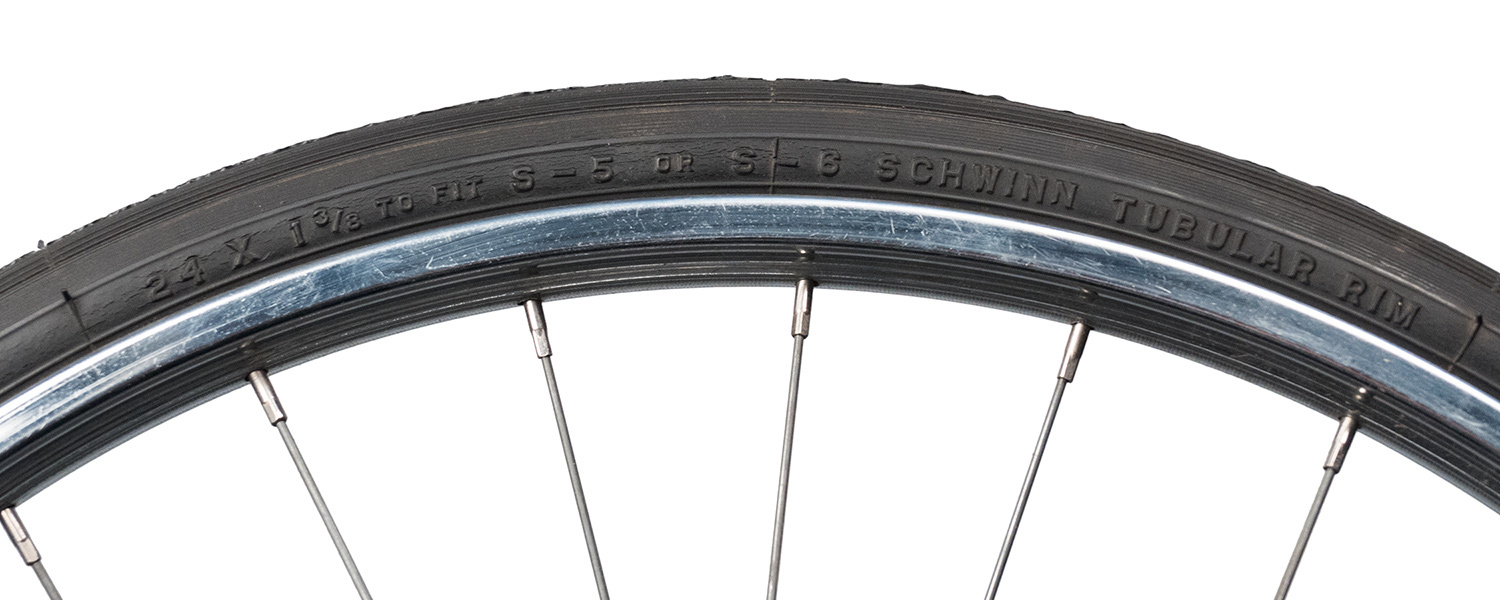
An antiquated but still common system uses “inch” designations, such as 26-inch, 27.5-inch, 29-inch. The inch size does not refer to the bead seat diameter or measurement. In fact the number of the inch designation has no actual inch measurement associated with it. It is simply a code of the vaguely approximate outside tire diameter. For example, there are several 26-inch tires that use different bead seat diameters. A 26 x 1 3/8 inch tire, for example, will not interchange with the common MTB 26 x 1.5 inch tire. There are three even more obscure tire standards also referred to as 26-inch diameter, but none are interchangeable. As a rule, tires marked with fraction sizes, such as 1/2, 3/4, etc., do not interchange with tires marked in decimal sizing, such as 0.5, 0.75, etc. For example, a 26” x 1-1/2” tire does not interchange with a 26” x 1.5” tire. There is not a logical reason for this system, it is simply what manufacturers have offered for nomenclature when selecting a tire.
FRENCH
Another common yet misleading system is the older French system of sizing. The numbers are reference numbers and are not accurate measurements of anything. Road bicycles commonly use a 700c tire that has a bead diameter of 622 mm. The “700c” does not refer to bead diameter. The “c” is simply part of the code system. There are also 700a and 700b tires and wheels, but none interchange with the more common 700c. Additionally, the 650b tires and wheels will not interchange with the 650c tires. There is not a logical reason for this system, it is simply what manufacturers have offered for nomenclature when selecting a tire.
ETRTO/ISO
The ETRTO (European Tire and Rim Technical Organization) system, sometimes called the ISO, short for the International Standards Organization, is now becoming more commonly used and understood. The ETRTO system uses a two number designations for both tire and rim sizing. The larger number is always the bead seat diameter. Rims and tires with the same number are made to fit one another. For example, tires marked 622 will fit rims marked 622, because the bead seat diameter is 622 millimeters for both. Look for this sizing system on the tire.
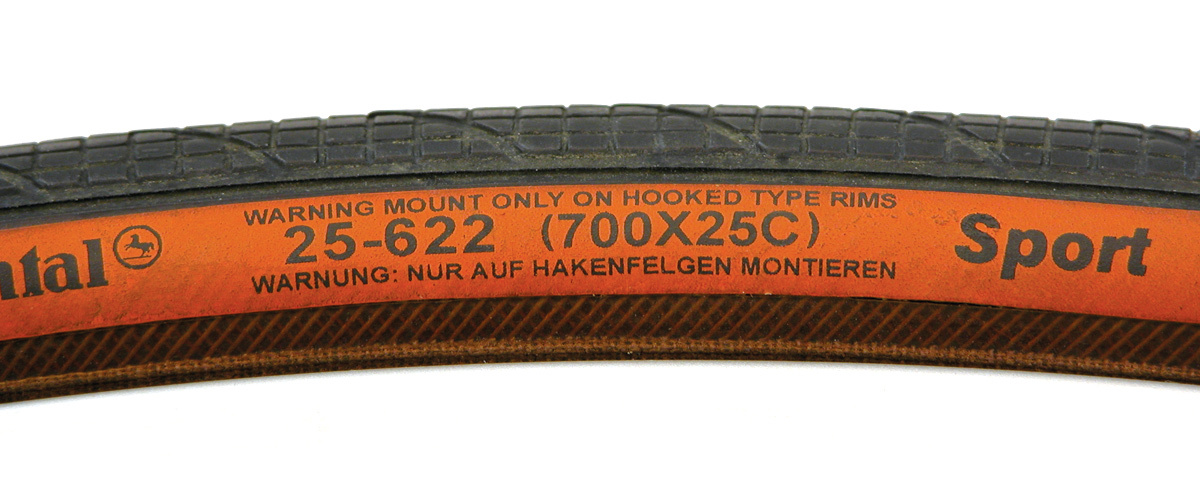
Rims also come labelled in ISO sizing, in the form of a two number system. The smaller number is the width in millimeters inside the rim sidewalls. Generally, a wider rim will accept a wider tire. A narrow tire on a relatively wide rim will mean the tire profile shape will be less rounded. A wide tire on a narrow rim will result in less support for the tire in cornering, which can cause the tire to laterally roll or twist. Additionally, rim caliper brakes will have very little room to clear the tire with a very wide tire on a very narrow combination. As a loose rule, the ISO tire width should be between one and a half to two times the ISO rim width. A rim with a width of 25mm between the sidewalls should use an ISO tire width of about 37–50mm.
Another consideration in selecting tires is the frame and fork. Although a tire might be correctly and safely fitted to a rim, the frame may lack clearance for the size. Inspect the bike if you are changing to a larger tire profile.
TIRE SIZING TABLE
The following table shows only some of the bicycle tires made. These are listed by ETRTO diameters (bead seat diameter).
| TIRE LABELS FOR INCH OR FRENCH STANDARD | ETRTO (ISO) BEAD SEAT DIAMETER | COMMON USES & NOTES |
|---|---|---|
| 16″ x 1″ to 2.2″ | 305 | Juvenile BMX bikes |
| 349 | Recumbent | |
| 18″ | 355 | BMX |
| 18″ | 400 | BMX |
| 20″ x 1″ to 2.2″ | 406 | Juvenile bikes, BMX, freestyle bikes, recumbents |
| 20″ x 1-1/2″ or 1-3/4″ | 419 | BMX, older Schwinn bikes |
| 20″ x 1-1/8″ and wider | 451 | BMX bikes |
| 24″ x 1.0″ to 2.0″ | 507 | Junvenile MTB bikes, some small road bikes |
| 24″ | 520 | BMX |
| 24″ x 1-3/8″ | 540 | Wheelchair tires |
| 24″ x 1-3/8″ | 547 | Older Schwinn tires |
| 26″ x 1.0 to 4.8″ | 559 | MTB bikes and fat tire bikes |
| 26″ x 1 1/2″. Also called 650C | 571 | Smaller road bikes, some specialty tri-athlete bikes |
| 27.5″ or 650B | 584 | MTB Bikes in 27.5” sizing |
| 26″ x 1-3/8″ | 590 | Commuter bikes |
| 26″ x 1-3/8″ | 597 | Older Schwinn bikes |
| 700c | 622 | Common road bike, hybrid and others |
| 27″ x 1-1/4″ | 630 | Older USA road bikes standard for mass market bikes |
 Digital Nomads